
Stevens-Johnson syndrome (“SJS”) and toxic epidermal necrolysis (“TEN”) involve severe skin reactions, horrific pain, and, often, lengthy hospitalizations. Childers, Schlueter & Smith is a national leader in SJS/TEN claims, and one of few firms with the capability of delivering an efficient and successful resolution to their SJS/TEN clients. Since 2016, Childers, Schlueter & Smith has resolved or obtained jury verdicts for nearly 20 claims on behalf of their SJS/TEN clients, with total settlements and jury verdicts of over $30,000,000. Childers, Schlueter & Smith is currently handling numerous SJS/TEN cases, and continues to stay current on relevant, developing legal and medical issues.
Do you have a Stevens-Johnson syndrome case?
You may have an SJS or TEN case if a prescription or over-the-counter drug triggered your reaction, or if a doctor or pharmacist missed the warning signs. Patients who were hospitalized, and families who lost a loved one, are the most common claimants. Because these cases turn on medical and pharmaceutical evidence, the sooner an experienced SJS/TEN attorney reviews your records, the better your chances of a full recovery.
How do you prove a Stevens-Johnson syndrome case, and who is liable?
Proving an SJS or TEN case comes down to two questions: which drug caused the reaction, and who is legally responsible for it. More than one party can be at fault, including the drug manufacturer, your prescribing doctor, your pharmacist, and any physician who treated you after the reaction began. Successful prosecution of an SJS/TEN case requires your counsel to carefully and strategically evaluate each of these issues.
Was the drug defective or inadequately labeled? (product liability and failure to warn)
According to reliable medical literature, as many as 85% to 90% of SJS/TEN cases are caused by a drug. Typically, your treating physicians will tell you which drug is the most likely cause. Skilled defense attorneys will always challenge that cause by pointing to another drug you may have taken, or by arguing you lack adequate evidence, so it’s almost always necessary to have causation evaluated by a trained medical professional. This crucial step is often missed by law firms without experience handling SJS/TEN claims.
In many cases, drug manufacturers identified the association between the drugs they sell and SJS/TEN reactions long before an injury occurred, yet failed to apply adequate warnings to their products. Some ignored credible scientific information and declined to add or update their warnings. Others may have added adequate warnings under the law, which can make a claim against that manufacturer ineffective. Drugs like Lamictal have been linked to SJS, and whether a given manufacturer is responsible has to be investigated as both a medical and a legal question by experienced counsel.
Was a doctor or pharmacist negligent? (medical malpractice)

Your prescribing doctor. Prescription drugs carry warnings for physicians, along with instructions on appropriate uses, reasonable doses, and adverse effects that a physician must consider before prescribing. A valid SJS/TEN claim may arise if a physician prescribes a drug for the wrong use or at the wrong dose, or fails to counsel you about the drug’s potential to cause SJS/TEN.
Your pharmacist. Most states have special laws requiring pharmacists to provide “face to face” counseling for all new medications. Many patients have grown used to the automated “counseling” at retail and supermarket pharmacies. Because SJS/TEN is a progressive disease, proper counseling can give a patient vital information to prevent further injury.
The physicians who treated you afterward. If you were diagnosed with SJS/TEN, you were likely treated by a dermatologist or taken to a burn center for treatment. Sometimes inexperienced physicians fail to consider SJS/TEN as a diagnosis, and a failure or unwillingness to diagnose may be malpractice. According to recent literature from the American Academy of Dermatology and the American Burn Association, treating SJS/TEN requires stopping the causative drug and transferring the patient to a burn center or other specialized treatment center. If your physicians did not tell you to stop the causative drug after your reaction began, or sent you home instead of to a burn center, you may have a claim against them.
How do you choose the right SJS/TEN law firm?
The first step to securing fair compensation for an SJS/TEN injury is choosing the right firm. Many firms claim to handle these cases, but very few have the expertise to properly prepare, file, and prosecute an SJS/TEN claim, and even fewer have ever taken one to trial. Before you hire any firm that claims SJS/TEN expertise, ask these questions:
- How many SJS/TEN claims have you handled in the last five years?
- Do you stay current on the medical issues related to SJS and TEN? If so, how?
- What is the standard of care for medical professionals treating SJS and TEN?
- What types of drugs are most likely to cause SJS and TEN?
- How will you prove in court that the drug I took caused my SJS or TEN injuries?
If the attorney you speak with can’t answer these simple questions, they might not be the right firm to handle your SJS/TEN claim.
What steps protect your SJS/TEN claim?
Childers, Schlueter & Smith will evaluate your claim against each of the issues above, and more, depending on the circumstances. Inexperienced attorneys can miss valid claims or overlook responsible parties, which reduces the compensation you should receive. Along with hiring an experienced SJS/TEN attorney, here are practical steps you can take:
- Save all of your prescription pill bottles and pharmacy instructions for medications taken before your SJS/TEN occurred.
- Save all paperwork given to you by medical professionals for SJS/TEN treatment, from your first skin reaction through your last hospitalization.
- Take photographs of the areas on your body affected by SJS/TEN, and note the date of each photo (do this for every medical appointment and every date of hospitalization).
How to start your Stevens-Johnson syndrome claim
If you’ve been diagnosed with SJS/TEN, have an experienced attorney evaluate your claim. These cases are complex and difficult, and an attorney without experience in this area will limit your chances of a positive recovery. Before you hand your information to any firm that claims to handle SJS/TEN cases, make that firm show you its actual experience with SJS and TEN. Save your medical information and document your injuries. There’s never a guarantee of a recovery, but these steps give you the best chance at just compensation.
Our Stevens-Johnson syndrome lawyers are well equipped to help with your potential case. Let us know by giving us a call or using our contact us form.
Frequently asked questions
Who can file a Stevens-Johnson syndrome lawsuit?
You may have a Stevens-Johnson syndrome claim if a prescription or over-the-counter drug triggered your SJS or TEN, or if a provider missed the warning signs. Patients who were hospitalized, and families who lost a loved one, are often eligible. A free case review is the fastest way to know where you stand.
How much is a Stevens-Johnson syndrome lawsuit worth?
There’s no set average. What an SJS case is worth depends on how severe the injury was, the medical bills, lost income, and lasting harm like vision loss or organ damage. Cases involving ICU or burn-unit care and permanent disability tend to carry the highest value. We’ll give you an honest read after reviewing the records.
How long do I have to file an SJS or TEN lawsuit?
It depends on your state and the facts of your case. Many states give you two years from the injury, and Georgia’s general deadline for a personal injury claim is two years. Some deadlines don’t start until you first connect the drug to the injury. Don’t wait, because evidence and deadlines both slip away quickly.
How much does it cost to hire a Stevens-Johnson syndrome lawyer?
Nothing upfront. Stevens-Johnson syndrome lawyers work on a contingency fee, so you pay no attorney fees unless we recover money for you. The first consultation is free. That lets injured patients and grieving families pursue a claim without adding to the medical bills they’re already facing.
Can you get disability for Stevens-Johnson syndrome?
Possibly. SJS and TEN survivors left with lasting complications, such as chronic pain, vision loss, or lung damage, may qualify for Social Security disability. Approval turns on how the condition limits your ability to work, not the diagnosis alone. Keep detailed medical records, because they’re what carry the claim.
Can I file a lawsuit if a family member died from SJS or TEN?
Yes. When Stevens-Johnson syndrome or toxic epidermal necrolysis is fatal, close family members can often bring a wrongful death claim. These cases can seek compensation for medical and funeral costs, lost support, and the loss of your loved one. Deadlines are strict, so it’s worth asking a lawyer early.
Other Stevens-Johnson Syndrome Lawyers News

Identifying the drug responsible for Stevens-Johnson syndrome can be difficult when several medications are involved. Medical records, prescription histories, and the timing of symptoms can play an important role in determining whether someone has a potential SJS lawsuit.

Stevens-Johnson syndrome and toxic epidermal necrolysis are rare but life-threatening reactions often linked to medications. Learn how SJS and TEN differ, common warning signs, long-term complications, and when medical malpractice may be involved.

A study has found that survivors of Stevens-Johnson syndrome (SJS) have a higher risk of cardiovascular problems, specifically cerebrovascular accidents and ischemic heart disease, compared to the general population.

Medical negligence may contribute to Stevens-Johnson Syndrome (SJS) or Toxic Epidermal Necrolysis (TEN). Learn how drug errors, misdiagnosis, or lack of warnings could support a legal claim.

Lamictal has been linked to Stevens-Johnson Syndrome (SJS), a life-threatening skin reaction. Learn how improper prescribing or dosing may lead to serious injuries and legal action.
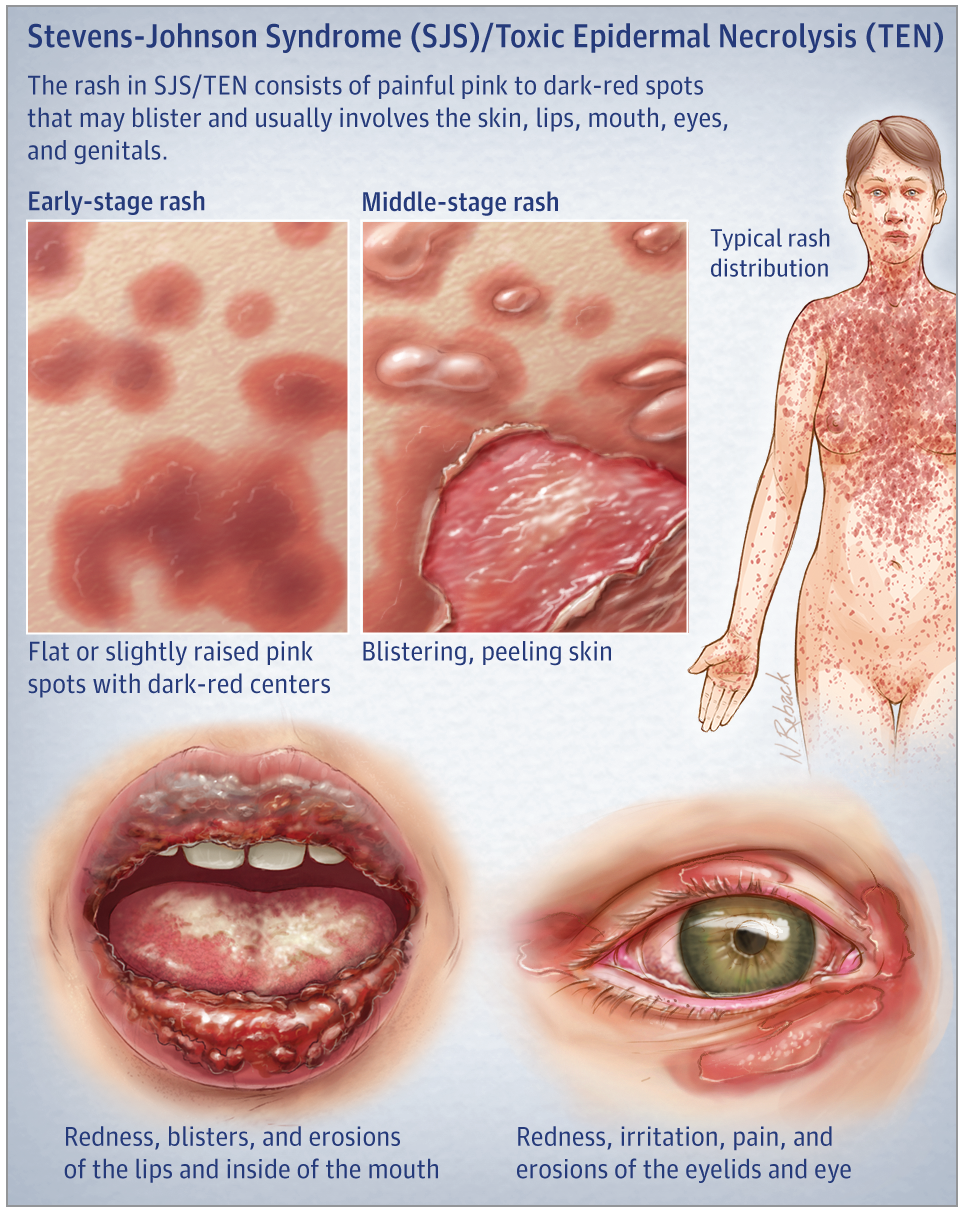
If you've been diagnosed with Stevens-Johnson Syndrome or Toxic Epidermal Necrolysis, it’s critical to act quickly and consult an experienced attorney to protect your legal rights and potential claim.
