
The Georgia Supreme Court has issued one of the most significant plaintiff-friendly decisions in years, restoring a $29.25 million wrongful death verdict that had previously been reduced to just $350,000 under Georgia’s medical malpractice damages cap.
In Clark v. Leigh, decided on June 16, 2026, the Court reaffirmed important protections for patients and families pursuing medical malpractice and wrongful death lawsuits. The decision could have far-reaching implications for future medical malpractice cases involving serious injuries, catastrophic harm, and preventable deaths.
For families who have lost a loved one because of alleged medical negligence, the ruling reinforces that Georgia juries—not lawmakers or insurance companies—play a critical role in determining the value of a person’s injuries and losses.
Why Clark v. Leigh Is Being Called a Major Victory for Medical Malpractice Plaintiffs
The case arose after a Georgia jury returned a verdict exceeding $29 million in favor of a deceased patient’s family and estate. The lawsuit alleged that medical negligence contributed to the patient’s death. Following the verdict, the trial court reduced the award to $350,000 under Georgia’s medical malpractice noneconomic damages cap. The Georgia Supreme Court reversed that decision and restored the jury’s verdict.
While the ruling doesn’t eliminate Georgia’s medical malpractice damages cap, it significantly limits how the statute applies in many cases involving noneconomic damages, such as pain and suffering.
The Court also refused to overturn its landmark 2010 decision in Atlanta Oculoplastic Surgery v. Nestlehutt, which held that caps on certain noneconomic damages violate Georgia’s constitutional right to a jury trial.
For years, defendants have sought an opportunity to challenge or weaken Nestlehutt. Instead, the Supreme Court reaffirmed the decision and relied heavily on its reasoning in reaching its conclusion in Clark v. Leigh.
How the Georgia Supreme Court Limited the Medical Malpractice Damages Cap
The most important part of the decision may not be the restoration of the verdict itself, but the Court’s explanation of why the damages cap could not be applied.
Under Georgia law, noneconomic damages in medical malpractice lawsuits are supposed to be combined into a single total before any cap is applied. Those damages can include pain and suffering, wrongful death damages, loss of consortium, and other non-financial losses.

The problem, according to the Court, is that some of those damages are already protected under Nestlehutt and cannot constitutionally be capped. Defense attorneys argued that courts should simply separate the damages and apply the cap only to the portions that might still be subject to limitation. The Supreme Court rejected that approach. The justices concluded that doing so would require courts to rewrite the statute rather than apply it as written.
Because the law requires all noneconomic damages to be aggregated before applying a cap, and because some of those damages can’t legally be capped, the Court found that the statutory framework could not function in this case.
The result was the restoration of the jury’s original $29.25 million verdict.
What This Decision Means for Wrongful Death Lawsuits in Georgia
The ruling is particularly important for families pursuing wrongful death lawsuits arising from medical malpractice.
In Georgia, surviving family members may seek compensation for the full value of a loved one’s life when negligence causes a death. In many medical malpractice cases, defendants have argued that statutory damage caps should significantly reduce those awards.
The Supreme Court’s decision makes that argument much more difficult in cases involving both wrongful death claims and estate claims for pain and suffering before death.
Many medical malpractice wrongful death lawsuits include claims brought by both the surviving family members and the deceased person’s estate. Those are precisely the types of cases that may benefit most from the Court’s reasoning in Clark v. Leigh.
For families seeking accountability after a preventable death, the decision strengthens the role of the jury and may help preserve verdicts that more accurately reflect the harm suffered.
What Questions Remain Unanswered After Clark v. Leigh?
Although the decision is a major victory for plaintiffs, it doesn’t resolve every issue surrounding Georgia’s medical malpractice damages cap. The Court declined to decide whether wrongful death damages alone receive the same constitutional protections recognized in Nestlehutt. That means future litigation could address situations involving stand-alone wrongful death claims that don’t include pain and suffering damages or related estate claims.
The Court also sent the case back to the trial court to consider whether the verdict should be reduced. In other words, the defendants may still argue that the verdict was excessive, but they can no longer rely on the statutory cap to automatically reduce the award to $350,000.
Even with those unanswered questions, the ruling is widely viewed as one of the most significant Georgia Supreme Court decisions affecting medical malpractice lawsuits since Nestlehutt itself.
How Childers, Schlueter & Smith Helps Families Pursue Medical Malpractice and Wrongful Death Claims
At Childers, Schlueter & Smith (CSS), our attorneys closely monitor major court decisions that affect victims of negligence throughout Georgia and across the country.
Our firm represents individuals and families in complex medical malpractice cases, wrongful death lawsuits, catastrophic injury claims, and other serious personal injury cases. We understand that families facing the aftermath of medical negligence often have questions about their legal rights, the value of their claims, and the challenges involved in holding healthcare providers accountable.
Medical malpractice lawsuits frequently require extensive investigation, expert medical testimony, and a thorough understanding of Georgia law. Wrongful death claims can be especially complex, particularly when multiple parties, hospitals, physicians, or healthcare systems are involved.
The Georgia Supreme Court’s decision in Clark v. Leigh highlights the importance of protecting the rights of injured patients and grieving families. It also serves as a reminder that jury verdicts continue to play a vital role in Georgia’s civil justice system.
If you have questions about a potential medical malpractice claim, wrongful death lawsuit, or other serious personal injury matter, Childers, Schlueter & Smith is available to help. Contact us online, use our live chat feature, or call 1-800-641-0098 for more information or a free consultation.
Other Medical Malpractice News

Stevens-Johnson syndrome and toxic epidermal necrolysis are rare but life-threatening reactions often linked to medications. Learn how SJS and TEN differ, common warning signs, long-term complications, and when medical malpractice may be involved.

A study has found that survivors of Stevens-Johnson syndrome (SJS) have a higher risk of cardiovascular problems, specifically cerebrovascular accidents and ischemic heart disease, compared to the general population.

Anesthesia errors can occur before, during, or after surgery and may lead to permanent injuries or wrongful death. Learn about common anesthesia mistakes, warning signs of negligence, and your legal options.

Medical negligence may contribute to Stevens-Johnson Syndrome (SJS) or Toxic Epidermal Necrolysis (TEN). Learn how drug errors, misdiagnosis, or lack of warnings could support a legal claim.

Lamictal has been linked to Stevens-Johnson Syndrome (SJS), a life-threatening skin reaction. Learn how improper prescribing or dosing may lead to serious injuries and legal action.
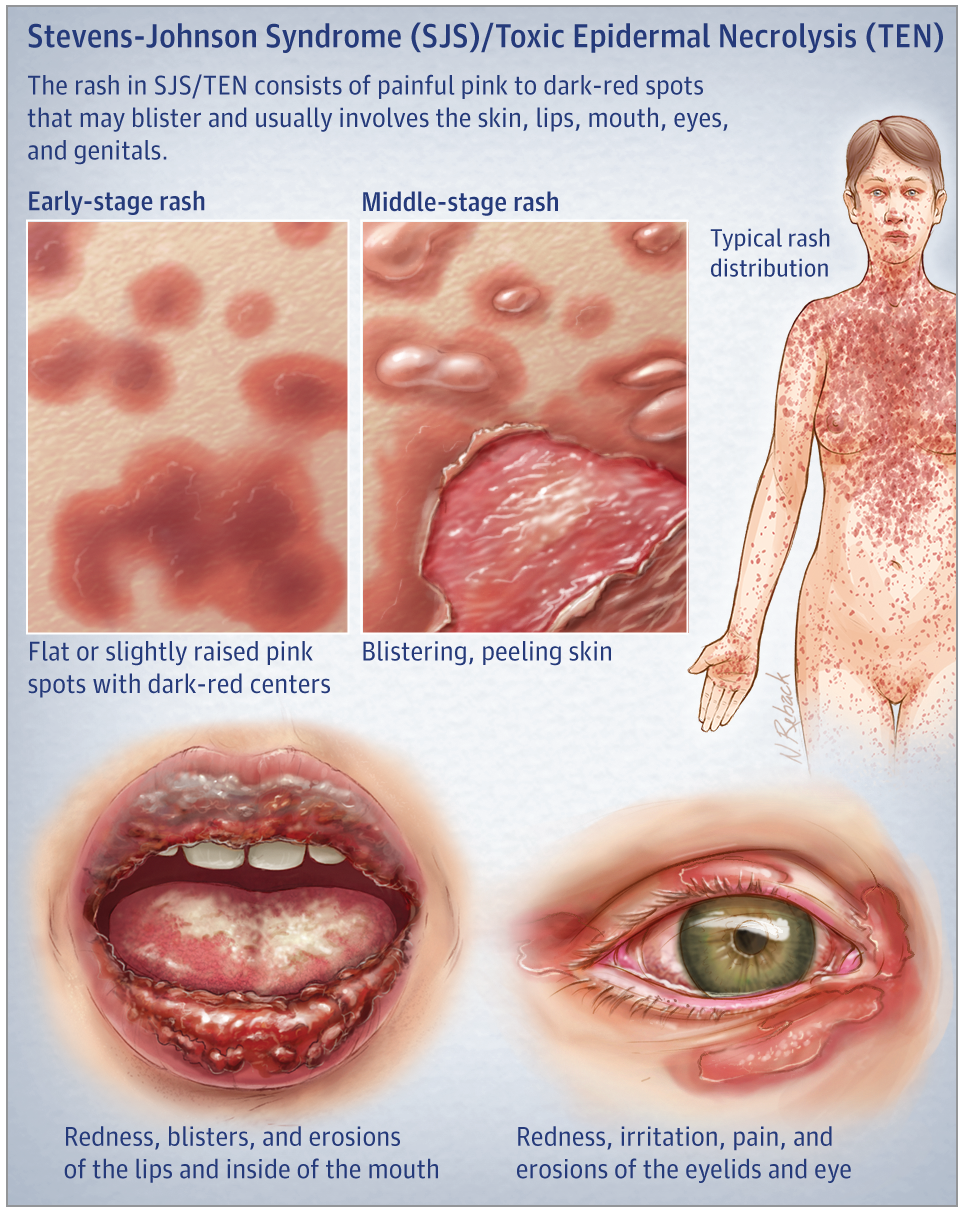
If you've been diagnosed with Stevens-Johnson Syndrome or Toxic Epidermal Necrolysis, it’s critical to act quickly and consult an experienced attorney to protect your legal rights and potential claim.
