
UPDATE — September 2026: A federal jury has returned a verdict for Mead Johnson in Inman v. Mead Johnson & Company, the first bellwether trial against Mead Johnson in the federal NEC baby formula multidistrict litigation.
On August 31, 2026, jurors in the U.S. District Court for the Northern District of Illinois rejected the plaintiff’s claims involving Enfamil Premature formula and the death of her premature son, Daniel, who developed necrotizing enterocolitis (NEC). The jury concluded that Mead Johnson’s formula did not cause Daniel’s NEC.
The Inman verdict resolves that individual case but doesn’t determine the outcome of other NEC baby formula lawsuits. Hundreds of cases remain pending in the federal MDL, while additional claims involving Mead Johnson and Abbott Laboratories are proceeding in state courts as well. The litigation has produced different results depending on the facts, defendants, and legal issues involved in each case.
Attention now turns to additional federal litigation, including the first federal NEC baby formula trial against Abbott Laboratories. This trial is set for mid-October 2026. Childers, Schlueter & Smith Partner C. Andrew Childers is preparing to help lead that trial alongside Plaintiff MDL Co-Lead Timothy Becker of Johnson // Becker.
The original article below was published before the Inman trial began and provides additional background on the case and the federal bellwether process.
August 2026: A closely watched federal trial involving allegations that cow’s milk-based preterm infant formula contributed to the development of necrotizing enterocolitis (NEC) is scheduled to begin this week, marking an important stage in the nationwide litigation against formula manufacturers Mead Johnson and Abbott Laboratories.
Jury selection in Inman v. Mead Johnson & Company LLC is scheduled to begin August 12 in the U.S. District Court for the Northern District of Illinois. The case is the first federal NEC baby formula bellwether trial against Mead Johnson expected to reach a jury in the multidistrict litigation (MDL).
The trial comes after U.S. District Judge Rebecca R. Pallmeyer rejected a last-minute attempt by Mead Johnson to dismiss the plaintiff’s claims based on a recent U.S. Supreme Court preemption decision.
For families following the NEC baby formula lawsuits, the trial is significant. Hundreds of cases are pending in the federal MDL, while other families are pursuing claims in state courts around the country. The litigation centers on allegations that manufacturers failed to adequately warn healthcare providers and families about the risk of NEC associated with cow’s milk-based formula products when fed to premature and low-birth-weight infants.
At Childers, Schlueter & Smith (CSS), our attorneys represent families nationwide in NEC preterm infant formula lawsuits and are actively involved in this litigation. That involvement will become especially important this fall, when the first federal baby formula NEC trial against Abbott Laboratories is scheduled to begin with CSS Partner C. Andrew Childers helping lead the trial against Abbott alongside Plaintiff MDL Co-Lead Timothy Becker of Johnson // Becker.
Judge Rejects Mead Johnson’s Last-Minute Bid to Stop NEC Trial
The case scheduled for trial this week was filed by Alexis Inman following the death of her premature son, Daniel.
According to court records, Daniel was born in 2020 prematurely and weighing less than two pounds. He was fed Enfamil Premature formula and later developed NEC, eventually dying shortly thereafter.
Inman alleges that Mead Johnson failed to adequately warn her son’s healthcare providers about the risks associated with its Enfamil preterm infant formula. Her case also includes allegations involving the product’s design.
Mead Johnson recently asked Judge Pallmeyer to dismiss the case, in part based on the U.S. Supreme Court’s June 2026 decision in Monsanto Co. v. Durnell. That case addressed whether federal pesticide law preempted certain state-law failure-to-warn claims involving Roundup.
Mead Johnson argued that the Supreme Court’s reasoning should also apply to Inman’s claims because infant formula is regulated by the U.S. Food and Drug Administration (FDA).
Judge Pallmeyer rejected that argument.
A key distinction, the court explained, is that the federal pesticide law considered by the Supreme Court contains an express preemption provision, while the Infant Formula Act does not. The court also distinguished the federal regulatory requirements governing the products and claims at issue.
The ruling clears the way for Inman’s case to proceed to a jury.
Why This First Federal NEC Bellwether Trial Matters
Bellwether trials are selected cases intended to test important legal and factual issues that may arise repeatedly across a larger group of similar lawsuits. Their outcomes don’t determine what will happen in every other case. Still, they can provide both sides with valuable information about how juries respond to the evidence, expert testimony, legal arguments, and damages claims.
That makes the Inman trial particularly important.
Earlier federal bellwether cases involving Abbott were resolved before reaching a jury after the court granted summary judgment to the company. In May, however, Judge Pallmeyer ruled that Inman’s claims against Mead Johnson could proceed.
The judge found that a reasonable jury could consider evidence concerning the relative risks of formula and breast milk and determine whether different or additional information from Mead Johnson could have affected Daniel’s care.
The upcoming trial will therefore allow a federal jury to consider many of the issues that have been at the center of NEC preterm infant formula litigation for years.
Federal NEC Litigation Against Mead Johnson and Abbott Continues
The federal litigation was established in 2022 and centralized in the Northern District of Illinois. The lawsuits generally involve premature infants who developed NEC after receiving cow’s milk-based preterm infant formula or fortifier products manufactured by Abbott Laboratories, which makes Similac products, or Mead Johnson, which makes Enfamil products.
NEC is a severe gastrointestinal disease that primarily affects premature and medically vulnerable infants. The disease can cause inflammation and death of intestinal tissue and may require emergency surgery. In the most serious cases, NEC can be fatal.
Families pursuing NEC baby formula lawsuits allege that manufacturers failed to adequately communicate evidence concerning the increased risk of NEC associated with cow’s milk-based products for premature infants compared with an exclusively human-milk diet.
Abbott and Mead Johnson have denied liability and have defended these cases on several grounds, including challenges involving causation, warnings, alternative feeding options, and federal regulation.
The litigation remains active, and individual outcomes have varied.
Federal Trial Follows Years of NEC Verdicts in State Courts
While the federal MDL has yet to produce a jury verdict, NEC cases have also been tried in state courts.
An Illinois jury awarded $70 million in April 2026 to four mothers who alleged their premature infants developed NEC after receiving Abbott’s Similac Special Care 24 formula.
Other NEC trials have produced substantial plaintiff verdicts as well as defense victories, and appellate courts have revisited some of those outcomes. Most recently, an Illinois appellate court ordered a new trial in a case that had resulted in a $60 million verdict against Mead Johnson.
Those differing outcomes demonstrate why it’s important not to treat any single verdict as determining the future of the litigation. Every NEC lawsuit depends on the child’s medical history, feeding records, product exposure, available medical and scientific evidence, applicable state law, and other case-specific facts.
The federal bellwether process may provide additional guidance as these cases continue moving through courts nationwide.
CSS Partner C. Andrew Childers to Help Lead October Abbott NEC Trial
The next major development for Childers, Schlueter & Smith will come this fall.
The first federal NEC baby formula trial against Abbott Laboratories is scheduled to begin October 19, 2026. CSS Partner C. Andrew Childers will help lead the trial alongside Plaintiff MDL Co-Lead Timothy Becker of Johnson // Becker.
For CSS, this is more than litigation we are simply following. Our attorneys are actively representing families and participating in the nationwide effort to hold infant formula manufacturers accountable for the injuries families allege were associated with their preterm infant products.
Complex product liability litigation against major corporations requires substantial medical, scientific, and legal preparation. NEC cases can involve thousands of pages of NICU records, feeding histories, medical research, expert testimony, corporate documents, and questions about what information was available to physicians and families when feeding decisions were made.
Our attorneys’ direct involvement in the federal litigation gives CSS firsthand knowledge of the issues shaping these cases and the defenses being raised by Abbott and Mead Johnson.
Have an NEC Claim? What Families Should Know as Federal Trials Begin
 Families should understand that the NEC litigation is ongoing. The upcoming bellwether trials are important milestones, but they don’t establish whether every family has a valid claim or predict the outcome of an individual lawsuit.
Parents whose premature child developed NEC after receiving Similac, Enfamil, or another cow’s milk-based preterm infant formula or fortifier may want to determine whether their circumstances warrant further investigation.
Important information in an NEC claim can include a child’s gestational age and birth weight, NICU feeding records, the specific formula or fortifier received, when NEC symptoms developed, surgical and pathology records, and the child’s subsequent medical history.
Families should also be aware that legal deadlines apply to product liability and wrongful death claims. Those deadlines vary depending on the circumstances and the law governing an individual case.
Because every family’s circumstances are different, parents may want to speak with an experienced NEC baby formula lawyer who can review their child’s medical and feeding history and determine whether a potential claim warrants further investigation.
CSS Represents Families in NEC Baby Formula Lawsuits Nationwide
Childers, Schlueter & Smith represents families across the U.S. whose premature infants developed NEC after receiving cow’s milk-based infant formula or fortifier products.
Our attorneys have experience handling complex mass tort and product liability litigation against some of the nation’s largest corporations. With C. Andrew Childers preparing to help lead an upcoming federal bellwether trial against Abbott Laboratories, CSS remains directly involved in the developing NEC preterm infant formula litigation.
If your premature baby developed NEC after being fed Similac, Enfamil, or another cow’s milk-based preterm infant product, our attorneys can review the circumstances and help you understand whether your family may have legal options.
Contact Childers, Schlueter & Smith online, via live chat, or by calling 1-800-641-0098 for a free consultation about an NEC baby formula lawsuit.
Other Mass Torts & NEC Baby Formula News

The $1.075 billion Philips CPAP settlement has entered the payment phase, providing compensation to eligible patients who alleged injuries from recalled breathing devices.
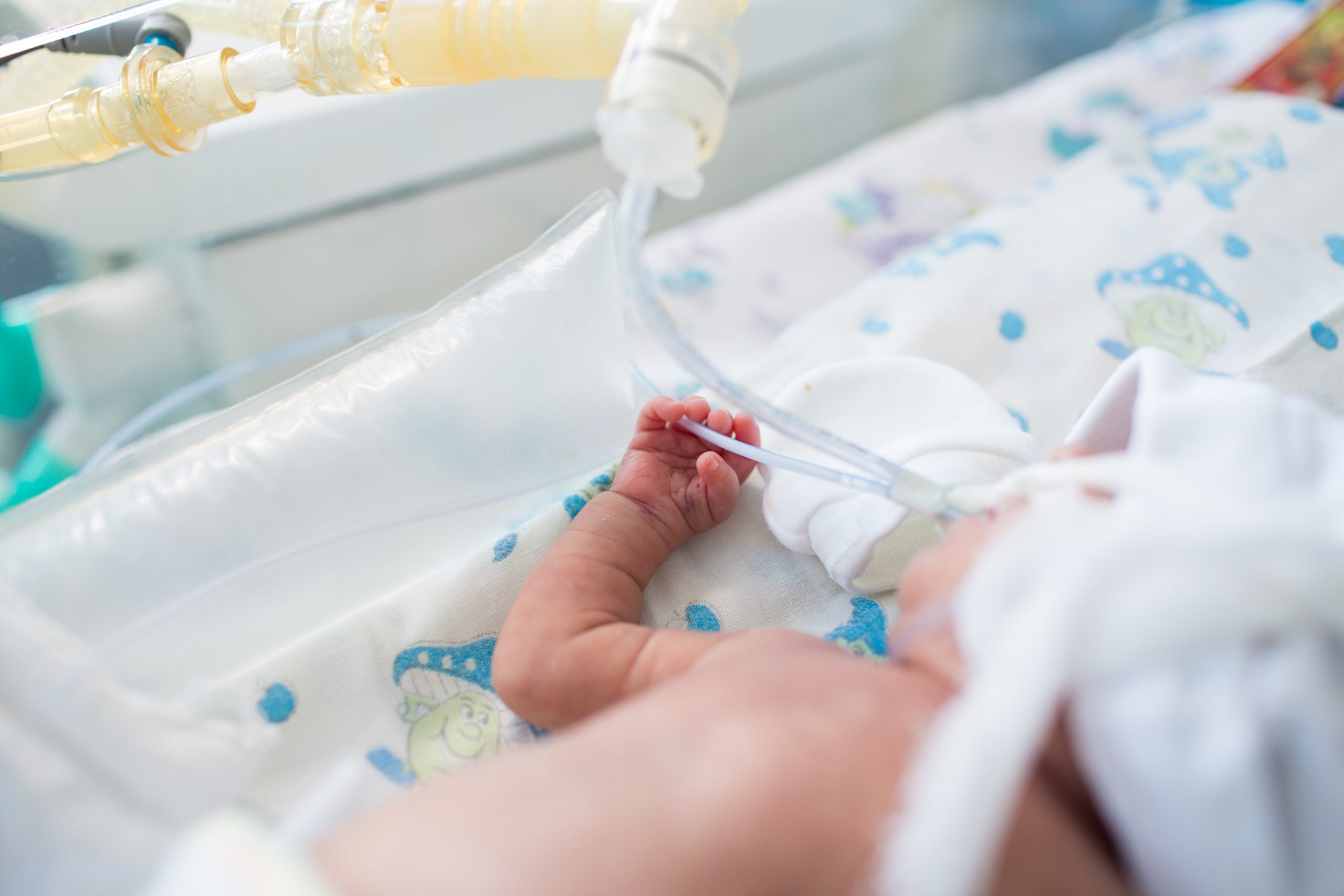
NEC preterm infant formula lawsuits continue to grow nationwide after an Illinois jury awarded $70 million to families of premature infants diagnosed with necrotizing enterocolitis after being fed formula in the NICU.

Research suggests Dupixent (dupilumab) may be linked to an increased risk of cutaneous T-cell lymphoma (CTCL). Learn what studies show, how CTCL may be misdiagnosed as eczema, and the legal options for patients diagnosed with lymphoma after taking Dupixent.

The FDA has again delayed its proposed ban on formaldehyde in hair relaxers as cancer research and federal lawsuits continue. Learn what this means for consumers and your legal options.

A diagnosis of necrotizing enterocolitis (NEC) can be overwhelming for families of premature infants. Learn when parents should consider legal guidance, what NEC baby formula lawsuits involve, and how families may seek accountability and compensation.

Childers, Schlueter & Smith has filed the first Dupixent lawsuit in Georgia, alleging a link between the eczema drug and cutaneous T-cell lymphoma (CTCL). The complaint highlights questions about risk disclosure.
